

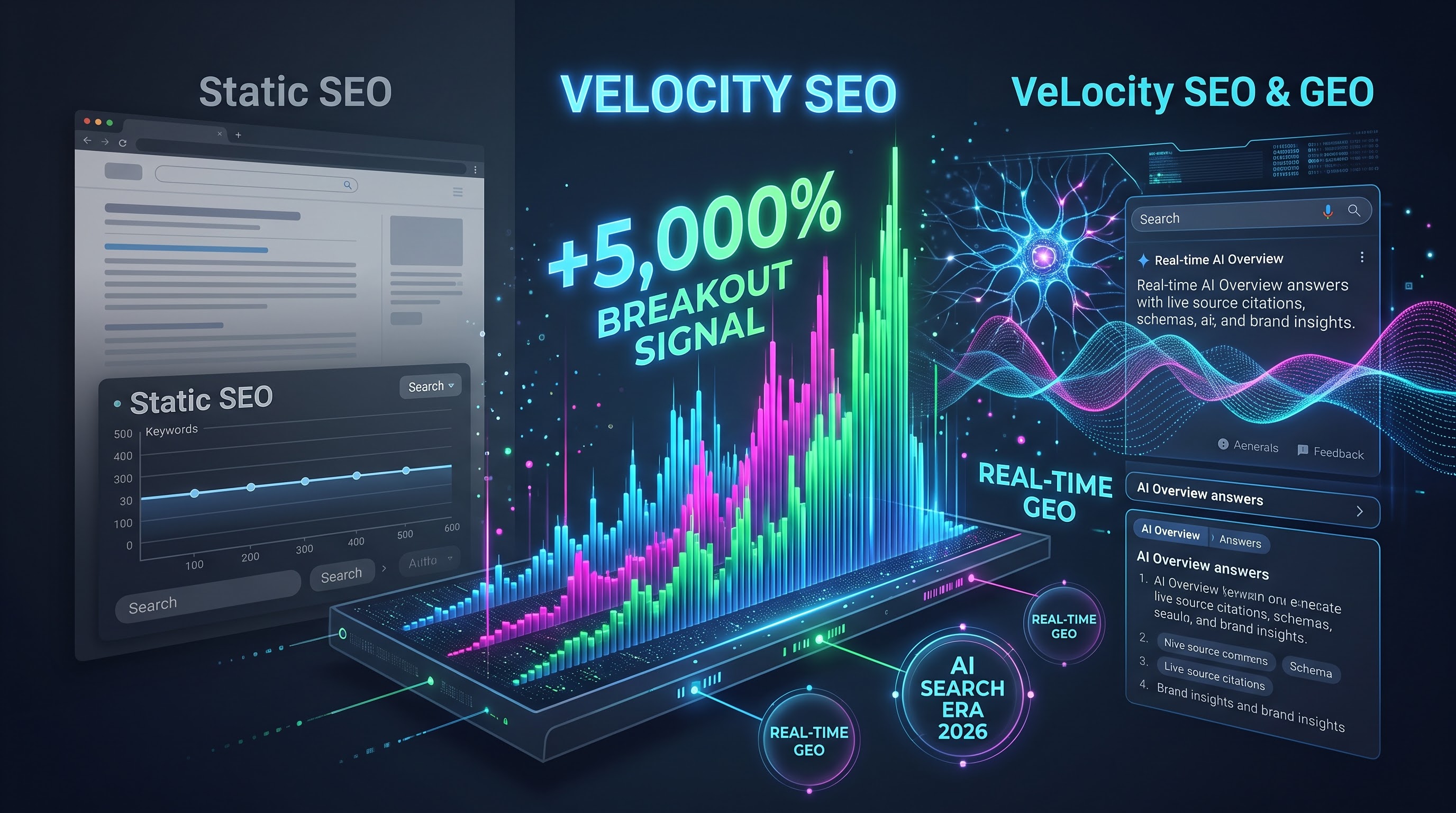
Why Static SEO Fails in the AI-Powered Search Era
In 2026, search engines operate more like answer engines. The traditional model—research keywords, publish evergreen guides, wait for indexing—is obsolete. With Google's new "Trending Now" infrastructure, velocity beats volume.
Example: A beauty brand optimizing only for "best moisturizer" misses breakthrough content about a trending ingredient gaining 5,000%+ search interest overnight. AI answer boxes prioritize real-time relevance—not historical backlinks.
This article delivers five immediate actions to position your web development services (or any site) on the cutting edge of velocity SEO.
The 10 Minutes That Matter: Catching Trends in Motion
GEO (Generative Engine Optimization)
When a trend spikes, check Google's current AI Overview. Does it offer generic definitions but lack specific data? That gap is golden. Publish content containing that exact data point. AI systems may cite your fresh insight as authoritative sources.
Action: Create a page for emerging topics like web APIs, LLM benchmarks, or design tools. Fill the AI's information blanks using tables, specs, or definitions it needs to ground its synthetic answers.
The Breakout Signal (5,000% Growth)
"Breakout" trends represent 5,000%+ interest growth in a short timeframe. These offer breakthrough potential for first-mover visibility.
Strategy Checklist:
- Daily Check: Refresh Google Trends dashboard (free) at least twice daily
- Publish during "first derivative" phase: Capture initial growth before the curve flattens
- Update existing authoritative pages: Add new sections to related guides instead of building fresh URLs

Schema Markup: The New Semantic Signal Boost
Technical SEO today hinges on entity recognition. Search machines parse your content's "Author Entity" status using structured data.
{ "@context": "https://schema.org", "@type": "ProfilePage", "name": "Sibany's Web Development Blog", "sameAs": [ "https://sibany.com", "https://linkedin.com/in/msibany" ], "about": ["Web Development", "Artificial Intelligence", "CMS Optimization"] }
Verification: This schema signals to crawlers that you're a real expert. Missing ProfilePage markers dilute trust scores in AI-first results.

The Feedback Loop: Distributing Insights Drives Signal Validation
Social referral traffic acts as an authority signal. Google's algorithms note that real users are actively engaging with your content when distributed across platforms.
Action Steps:
- Publish the velocity-captured article to your CMS
- Share on social platforms: Twitter/X, LinkedIn, Mastodon
- Repackage into short videos: Embed Giphy, Loom, or ComfyUI-generated visuals explaining the trend's impact
- Monitor referral stats in GA4: Track initial traffic surges within hours of publication
This loop validates relevance and accelerates indexing. Static content without external engagement remains orphaned.
Sector-Specific Tactics for SaaS & Web Dev Firms Like Sibany
"Pain Point" Trigger Monitoring:
If searches for "web developer cost overruns" or "Laravel migration struggles" spike, create content addressing those operational challenges. Dedicate sections of your service pages to these trending pain points.
Optimization Steps:
- Solve the problem first—then optimize content with current pricing/tech stack data
- Optimize for "Why Now?" questions: that accompany emerging trends and trending topics
An article addressing "web development pricing volatility 2026" with current data will outrank generic guides lacking context.
Conclusion: Speed Meets Quality for Sustainable Growth
Google Trends isn't a crystal ball—it's a radar. The challenge: identify opportunity, then execute with expertise. Combine the 10-minute window for velocity tracking with long-term authority-building.
Ready to amplify your web dev site's visibility? Use Google Trends' velocity insights as real-time navigators. Your next traffic surge starts with spotting and acting early.